
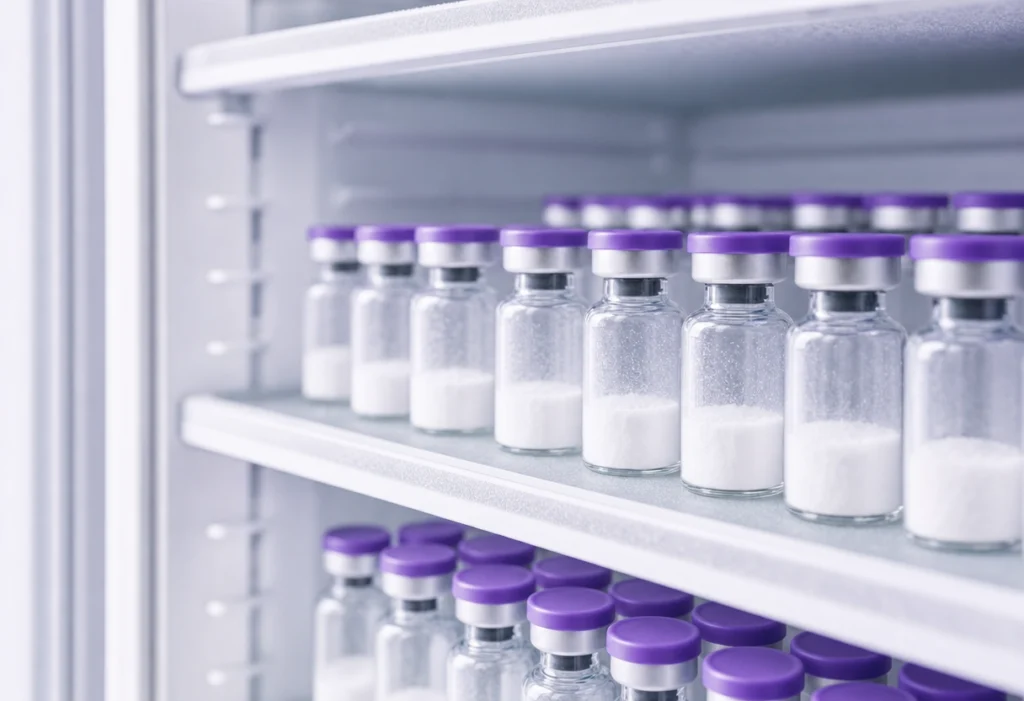
Peptides are highly valuable biomolecules used across research, pharmaceuticals, aesthetics, and biotechnology. Their effectiveness, however, depends heavily on how well they are stored, handled, and prepared. Even the most precisely synthesized peptide can lose integrity, degrade, or become chemically unstable if the correct storage conditions are not maintained. For researchers, clinicians, or laboratories working with peptides, understanding these best practices is essential for ensuring consistent, accurate, and reproducible results.
This guide outlines the most important considerations for peptide storage and handling, along with the high standards followed at Aesthetic Labs to ensure every peptide reaches you in optimal condition.
Why Proper Peptide Storage Matters
Peptides are sensitive molecules. Their stability can be influenced by temperature, humidity, exposure to light, pH, oxidation, and even the number of times they are thawed and refrozen. When mishandled, peptides may:
- Lose biological activity
- Undergo structural changes
- Form aggregates
- Oxidize or degrade
- Produce inconsistent experimental results
Maintaining strict control over storage and handling prevents these issues and improves the reliability of your research or clinical applications.
Storing Lyophilized Peptides the Right Way
Lyophilized (freeze-dried) peptides are generally more stable than peptides in solution. However, proper storage is still essential to preserve their quality.
1. Keep Peptides in a Cool, Dry Environment
Lyophilized peptides should be stored:
- Ideally between 2–8°C (standard refrigerator temperature)
- In a dry environment, away from humidity
- Inside tightly sealed vials to avoid moisture absorption
Moisture is one of the leading causes of peptide degradation. Once water infiltrates the vial, even at small levels, the peptide may slowly begin breaking down or interacting with contaminants.
2. Avoid Frequent Temperature Fluctuations
Repeated warming and cooling—such as opening the refrigerator often—can cause condensation inside vials. To minimize risk:
- Store peptides deeper inside the refrigerator, not on the door
- If storing long-term, consider moving them to a −20°C freezer (unless the sequence is temperature-sensitive)
A constant temperature ensures long-term peptide integrity.
Reconstituting Peptides Safely and Correctly
Once you’re ready to use your peptide, proper reconstitution is crucial.
1. Choose the Right Solvent
Always reconstitute peptides using a solvent appropriate for their sequence. Depending on the peptide, this may be:
- Sterile water
- Bacteriostatic water
- Acetonitrile/water mixture
- DMSO for hydrophobic peptides
Selecting the wrong solvent can cause incomplete dissolution, reduced activity, or peptide damage.
2. Avoid Agitation That Can Damage Peptide Structure
Never shake the vial vigorously. Instead:
- Tilt gently
- Roll the vial between fingers
- Let the solvent naturally dissolve the peptide
Harsh mixing can disrupt delicate peptide bonds.
Aliquoting: Protecting Peptides from Freeze–Thaw Cycles
After reconstitution, peptides are significantly more vulnerable to degradation.
Why Aliquoting Is Essential
Instead of freezing an entire vial and thawing it repeatedly for use, divide the reconstituted peptide into smaller portions:
- Use sterile micro-vials
- Prepare only the amount needed for immediate use
- Freeze remaining aliquots for later
Every freeze–thaw cycle reduces purity and biological activity, especially for long or complex peptide chains. Aliquoting ensures each portion remains fresh and stable.
Labeling & Documentation for Traceability
Good record-keeping is a cornerstone of professional laboratory practices.
Each peptide aliquot should be clearly labeled with:
- Batch number
- Concentration
- Date of reconstitution
- Storage conditions or notes (if needed)
This ensures:
- Traceability
- Consistency in experiments
- Accurate comparison of results over time
Proper labeling eliminates confusion, especially when multiple researchers handle the same inventory.
Protection from Light and Oxidation
Exposure to light—especially UV light—can trigger chemical changes in peptide structures. Similarly, oxygen can cause oxidation of certain amino acids, such as methionine or cysteine.
To prevent this:
- Keep vials away from direct sunlight
- Minimize exposure to air
These precautions ensure peptides maintain their intended structure and biological performance.
Implementing Clear Handling Protocols in the Laboratory
Laboratories that regularly work with peptides should create standardized handling procedures so that every technician or researcher follows the same steps. These protocols should include:
- Storage guidelines
- Reconstitution instructions
- Aliquoting techniques
- Labeling standards
- Degradation risk factors
- Safety and contamination prevention
A consistent workflow ensures that peptide samples remain stable and results remain reliable, regardless of who handles them.
Aesthetic Labs: Our Commitment to Quality & Purity
At Aesthetic Labs, we understand how critical peptide integrity is for research, clinical treatments, and advanced biotechnology. That’s why every peptide we supply undergoes stringent quality control and is packaged using high-grade materials designed to maintain stability throughout its journey—from synthesis to delivery.
Our peptides are:
- Supplied in airtight, contamination-resistant vials
- Packaged to minimize moisture, oxidation, and light exposure
- Produced under controlled laboratory conditions
- Shipped with stability in mind
This ensures that when you receive your peptides, they are in perfect condition and ready for accurate, reproducible application.